
Your cart is currently empty!
What Can I Give My Dog for Allergies? A Veterinarian’s Guide to Safe & Effective Relief

·
As a pet owner, watching your dog suffer from constant itching, red skin, or digestive upset is heartbreaking. The immediate question that arises is: what can I give my dog for allergies? The answer is not one-size-fits-all, as it depends on the allergy type, severity, and your dog’s overall health. This guide provides a clear, safe, and actionable roadmap—from immediate soothing steps to long-term management strategies—to help you navigate the confusing world of canine allergy relief.
Understanding the Allergy Landscape: First Steps Before Giving Anything
Before you administer any treatment, it’s crucial to identify the likely trigger. Canine allergies generally fall into three categories:
- Environmental/Seasonal (Atopy): Reactions to pollen, dust mites, mold.
- Food Allergies: Immune response to specific proteins (beef, dairy, chicken are common).
- Flea Allergy Dermatitis: Severe reaction to flea saliva.
Immediate Action: Schedule a veterinary appointment. Your vet can rule out other conditions (like parasites or infections) and help pinpoint the cause, which is the first step in determining what you can give your dog for allergies effectively.
Your Decision Pathway: A Visual Guide to Relief Options
The following flowchart outlines a safe, step-by-step approach to answering the question, “what can I give my dog for allergies?” Always start by consulting your veterinarian.
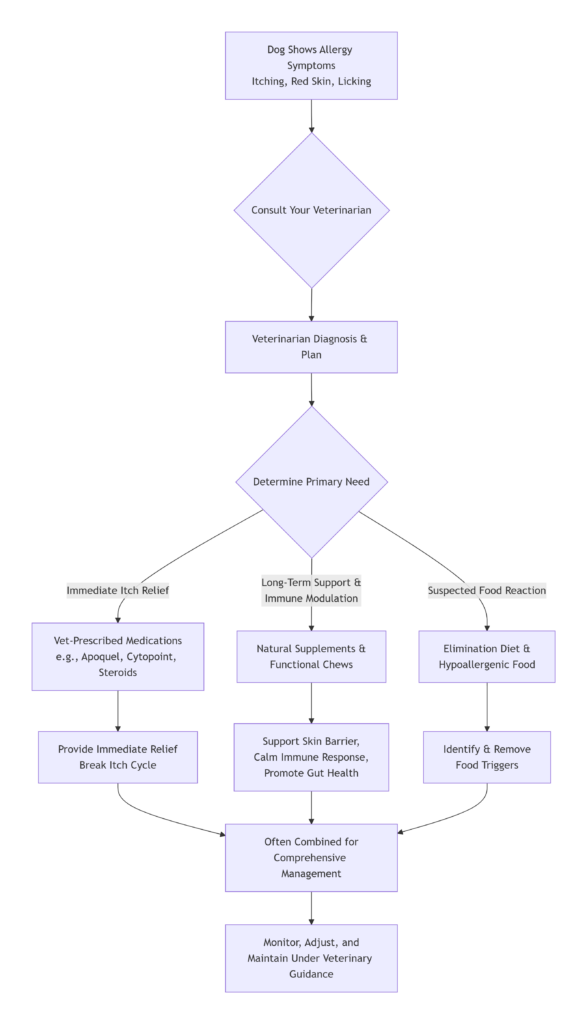
Category 1: Veterinarian-Prescribed Medications (For Moderate to Severe Cases)
For significant discomfort, your vet may prescribe one of the following. Never give human allergy medication without explicit veterinary instruction, as many are toxic to dogs.
- Apoquel (oclacitinib): Controls itch and inflammation at the source (Janus kinase enzymes). Works quickly, often within hours.
- Cytopoint (lokivetmab): An injectable “monoclonal antibody” that neutralizes a key itch signal (IL-31). Provides relief for 4-8 weeks.
- Prescription Steroids (e.g., Prednisone): Powerful anti-inflammatories used for short-term, severe flare-ups. Long-term use has significant side effects.
Category 2: Natural Supplements & Functional Ingredients (For Daily Support & Mild Cases)
For mild allergies or as supportive therapy alongside other treatments, these natural ingredients can be highly effective. This is where many pet owners look for a daily answer to what can I give my dog for allergies.
| Ingredient Category | How It Helps Allergies | What to Look For / Example |
|---|---|---|
| Omega-3 Fatty Acids | Powerful anti-inflammatory; helps repair the skin’s natural barrier, reducing moisture loss and irritation. | High-EPA Salmon Oil. Look for purified, high-potency sources. |
| Probiotics | Over 70% of the immune system resides in the gut. A balanced microbiome is crucial for proper immune response and reducing systemic inflammation. | Multi-Strain Probiotic Blends (e.g., 6 strains) designed for canine gut health. |
| Quercetin | Often called “Nature’s Benadryl.” A natural bioflavonoid that stabilizes mast cells to prevent the release of histamine. | Often combined with Bromelain (an enzyme from pineapple) to enhance absorption and effectiveness. |
| Natural Anti-inflammatories | Botanicals that soothe the body’s inflammatory pathways without the side effects of steroids. | Turmeric (Curcuma Longa) Extract, Licorice Root. Look for standardized extracts for potency. |
| Immune Modulators | Ingredients that help balance and support a healthy, appropriate immune system response. | Echinacea, Astragalus, Vitamin C. These work synergistically to build resilience. |
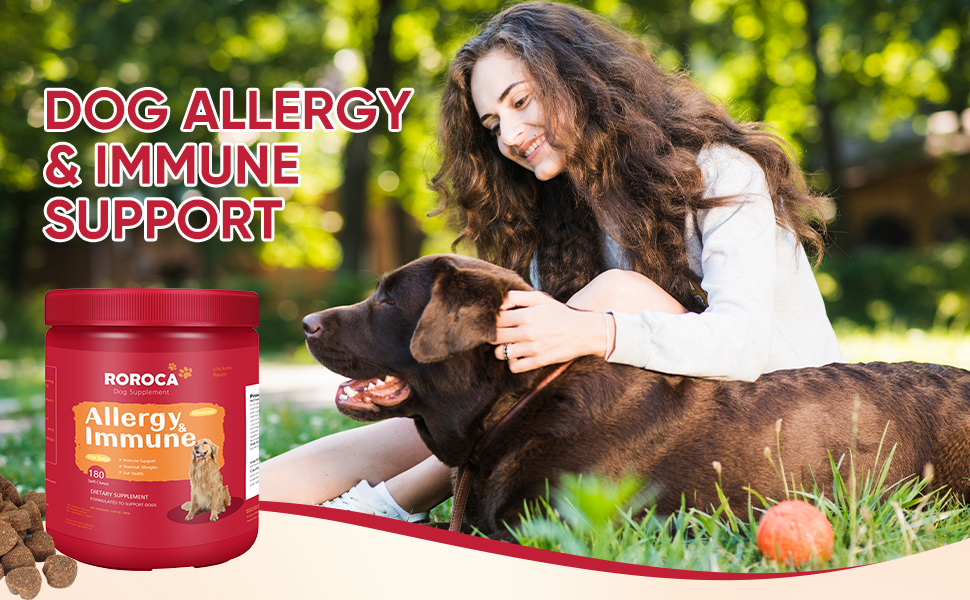
Product Spotlight: Supplements like ROROCA’s Allergy Relief Soft Chews combine many of the above ingredients—such as Salmon Oil, Licorice Root Extract, Curcuma Longa (Turmeric), Echinacea, and a 6-Strain Probiotic Blend—into a convenient, tasty format. This comprehensive approach simultaneously soothes itching, supports gut health, and strengthens the immune system, making it a practical daily option for many owners wondering what can I give my dog for allergies.
Category 3: Dietary Management & Topical Solutions
- Hypoallergenic or Novel Protein Diets: If a food allergy is suspected, your vet may recommend a prescription diet or a carefully selected limited-ingredient diet with a protein source your dog has never eaten (e.g., kangaroo, venison, or hydrolyzed protein where the molecules are too small to trigger a reaction).
- Soothing Baths: Weekly baths with a colloidal oatmeal or aloe vera shampoo can wash away allergens and soothe itchy skin. For added relief, a final rinse with diluted apple cider vinegar can help restore the skin’s acidic pH.
- Environmental Control: Use HEPA air filters, wash bedding in hot water weekly, and wipe your dog’s paws and coat after outdoor walks to remove pollen.
Step-by-Step Action Plan: What You Can Do Today
- Consult Your Vet: This is the non-negotiable first step for a proper diagnosis.
- Implement Environmental Controls: Reduce allergen exposure in your home.
- Consider a Dietary Review: Discuss an elimination diet trial with your vet.
- Introduce a Supportive Supplement: For long-term immune and skin health, a high-quality supplement containing omega-3s, probiotics, and botanicals can be a cornerstone of management.
- Use Topical Soothers: Medicated or oatmeal baths can provide immediate, safe comfort.
- Follow Veterinary Prescriptions: If needed, use prescribed medications as directed to break severe itch cycles.
What to Avoid Giving Your Dog
- Human Antihistamines (like Benadryl) can be used only under specific vet guidance regarding dosage and type, as some formulations (e.g., containing pseudoephedrine or xylitol) are deadly.
- Essential Oils are often toxic to pets.
- Random Herbal Supplements without veterinary science backing.
Conclusion: A Multi-Faceted Approach is Key
Ultimately, the answer to “what can I give my dog for allergies” is often a combination of strategies. Partnering with your veterinarian to create a plan that may include targeted medications for flare-ups, a supportive diet, and daily natural supplements is the most effective path to lasting comfort. By focusing on both immediate symptom relief and long-term immune and skin health, you can help your dog lead a happier, itch-free life. For many, incorporating a scientifically-formulated, natural supplement chew provides the consistent, comprehensive support needed to manage allergies season after season.