
Your cart is currently empty!
What to Give Dogs for Allergies: Your Smart Decision Matrix for Effective Relief

·
The frantic scratching, the red skin, the endless paw licking—watching your dog suffer from allergies is heart-wrenching. In that moment of concern, one pressing question arises: what to give dogs for allergies that is both safe and effective? The answer is not a single magic pill, but a strategic choice based on your dog’s unique situation. Navigating the maze of options—from vet prescriptions to over-the-counter supplements—requires a clear plan. This guide serves as your decision-making matrix, helping you match the right solution to your dog’s specific type of allergy and symptom severity.
Before You Give Anything: The Critical First Step
The most important step in deciding what to give dogs for allergies is identifying the “why.” Allergies generally stem from three sources, and the best remedy differs for each:
- Environmental Allergies (Atopy): Reactions to pollen, dust mites, mold spores, or grasses. Symptoms are often seasonal and affect the skin and ears.
- Food Allergies or Sensitivities: An adverse reaction to a specific ingredient (common culprits: beef, dairy, chicken, wheat). This typically causes year-round itching, gastrointestinal issues, or chronic ear infections.
- Flea Allergy Dermatitis (FAD): An intense reaction to flea saliva, where even a single bite can cause widespread itching and inflammation.
Action Step: Consult your veterinarian. They can help rule out other conditions (like parasites or infections) and pinpoint the likely trigger, which is the cornerstone of effective treatment. Trying to guess what to give dogs for allergies without a diagnosis can waste time and money, and prolong your dog’s discomfort.
Your Decision Matrix: Matching the Remedy to the Need
Use this framework to understand your options. The best approach often involves a combination from different categories.
Category 1: For Fast, Prescription-Strength Relief (Moderate to Severe Symptoms)
When itching is intense and disrupting your dog’s (and your) quality of life, these veterinary-prescribed options are powerful tools.
- Apoquel (oclacitinib): A daily tablet that targets specific itch and inflammation pathways (JAK enzymes) in the immune system. It often works within hours.
- Cytopoint (lokivetmab): An injectable biologic that works like a “monoclonal antibody” to neutralize a key itch signal (IL-31). One injection typically provides 4-8 weeks of relief.
- Prescription Steroids (e.g., Prednisone): Potent anti-inflammatories used for short-term control of severe flare-ups. Long-term use is limited due to potential side effects.
Verdict: These are excellent for crisis management and breaking a severe itch cycle, under the direct guidance of your vet.
Category 2: For Daily Support, Prevention & Mild Symptoms (The Foundational Approach)
This category is where most pet owners look for a sustainable, long-term answer to what to give dogs for allergies on a daily basis. It focuses on supporting the body’s natural defenses and reducing overall reactivity.
-
Targeted Nutritional Supplements: Modern allergy supplements go beyond simple antihistamines. They use a combination of science-backed ingredients to address the problem from multiple angles:
- Natural Anti-Inflammatories: Ingredients like Salmon Oil (rich in Omega-3s EPA/DHA) and Curcuma longa extract (curcumin) work to calm the systemic inflammation that drives itching and redness.
- Gut-Immune System Support: A healthy gut is critical for a balanced immune response. A special 6-strain Probiotic Blend helps promote a healthy gut microbiome. Apple cider vinegar can support digestive health, while Bromelain (an enzyme) aids in protein digestion and has anti-inflammatory properties.
- Immune System Modulators: Herbs like Echinacea extract and Astragalus P.E., along with Vitamin C, are known for their immune-supporting and antioxidant properties, which can help build a more resilient system.
- Soothing Botanicals: Licorice root extract has natural properties that can help soothe irritation and support the body’s stress response.
- Hypoallergenic or Novel Protein Diets: If a food allergy is suspected (based on vet advice), a prescription hydrolyzed protein or novel protein (e.g., kangaroo, venison) diet may be necessary. This is a diagnostic tool and long-term solution, not a supplement.
Category 3: For Immediate, At-Home Soothe & Environmental Control
These are supportive measures you can implement right now.
- Soothing Baths: Weekly baths with a gentle, hypoallergenic shampoo containing colloidal oatmeal or aloe vera can wash away surface allergens and soothe inflamed skin.
- Antihistamines (like Benadryl®): Only under specific vet guidance. Some vets may recommend certain types and doses for mild cases. Never give human allergy medication without explicit instruction, as many are toxic.
- Environmental Control: Use HEPA air filters, wash bedding in hot water weekly, and wipe your dog’s paws and coat after being outdoors.
Putting It All Together: A Strategic Action Plan
So, what is the practical answer to what to give dogs for allergies? Follow this path:
- Diagnose: Visit your vet to identify the primary allergy type.
- Control the Environment: Implement allergen-reduction practices at home.
-
Choose Your Core Support:
- For severe, acute flares, discuss prescription options (Category 1) with your vet to get the situation under control.
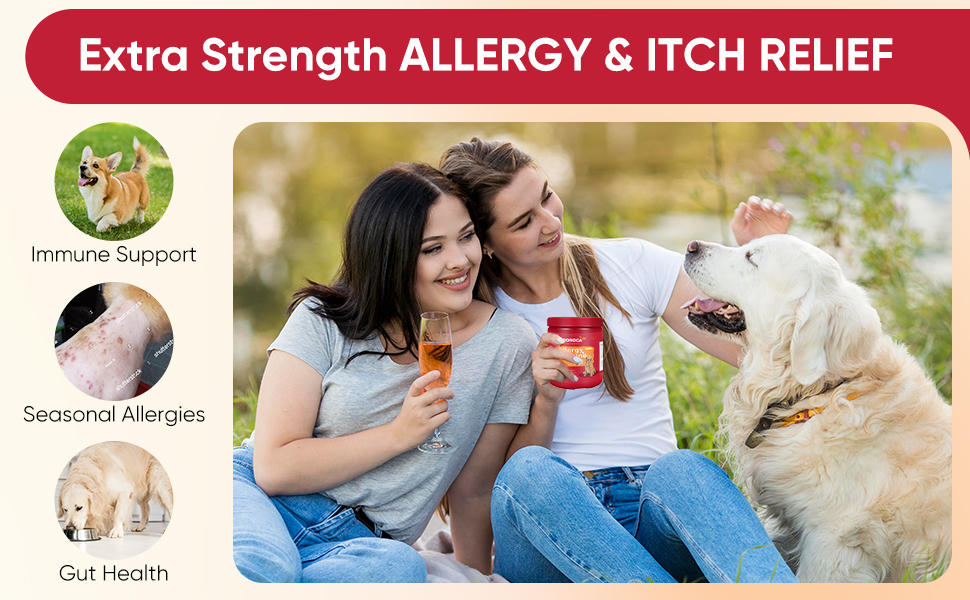
- For daily management, prevention, and mild-to-moderate symptoms, a high-quality, comprehensive natural supplement (Category 2) can be an excellent foundation. Its comprehensive approach ensures your pet stays active and happy, regardless of the season.
- Consider Diet: If food is a suspect, work with your vet on an elimination diet trial.
- Combine for Best Results: Many successful plans use a prescription to stop a severe flare, then maintain comfort with daily supplements and environmental control. ROROCA 180-count pack of a reliable supplement provides double the value and ensures you have a consistent supply of allergy relief for this ongoing management.
What NOT to Give Your Dog
- Human medications (except under strict vet direction).
- Essential oils, many of which are toxic to pets.
- Unverified “miracle cures” without scientific backing or veterinary input.
Conclusion: Empowerment Through Informed Choices
Deciding what to give dogs for allergies is about making an informed choice that aligns with your dog’s specific needs. There is no single answer, but a spectrum of tools. By partnering with your veterinarian and understanding the strategic roles of different remedies—from prescription strength for crises to daily natural support for building resilience—you can create a tailored plan. A reliable solution like a well-formulated natural supplement, designed as a seasonal allergy solution, offers a proactive way to help your dog enjoy the outdoors again with reduced sneezing, itching, and discomfort. Start with a vet visit for a clear diagnosis, then confidently build a multi-faceted approach that brings your dog lasting comfort.